Minecraft how to plant cocoa beans is simple: find at least one cocoa bean in a jungle, place it on the side of a jungle log, jungle wood, stripped jungle log, or stripped jungle wood, then wait for the pod to grow. Harvesting a fully grown pod gives three cocoa beans, letting you expand the farm indefinitely.
Minecraft how to plant cocoa beans
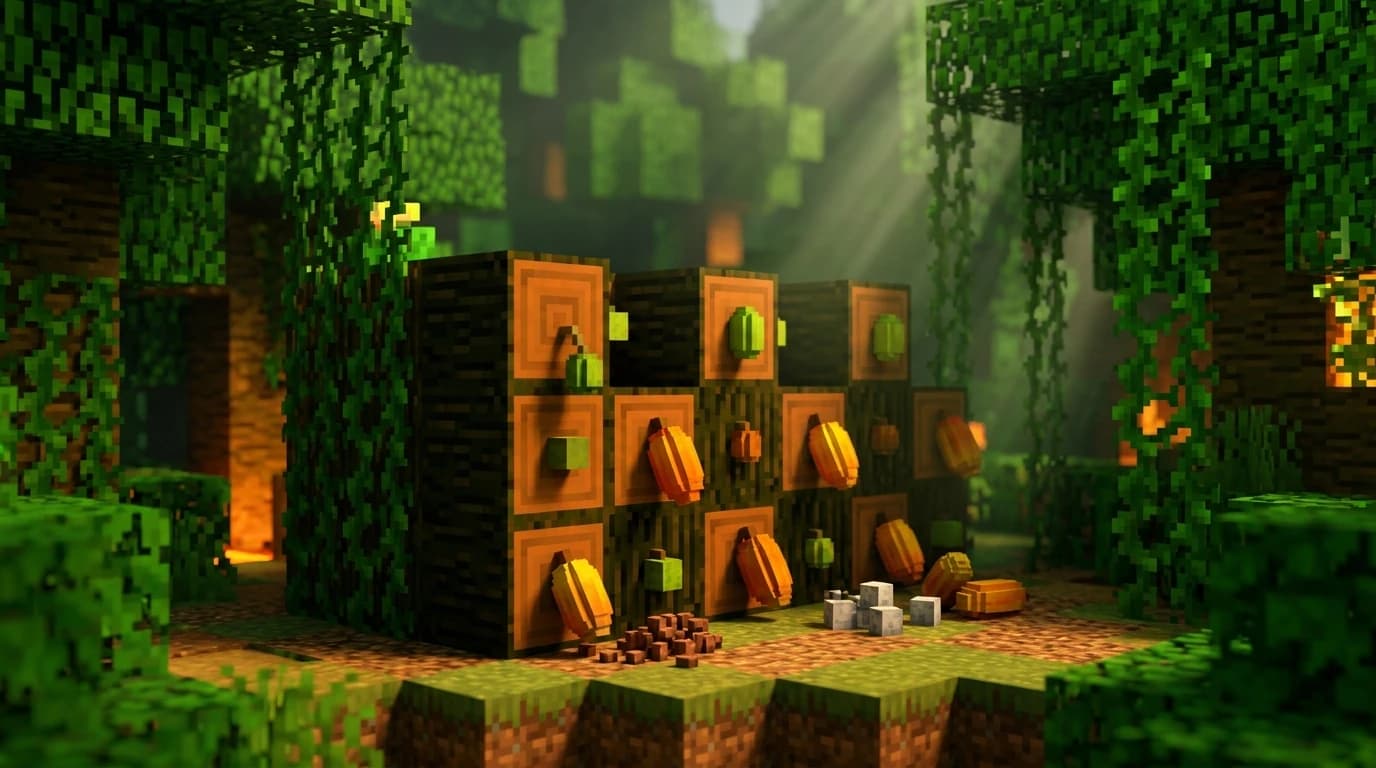
Cocoa beans do not grow in farmland, dirt, or water. They grow as cocoa pods attached to the side of jungle wood blocks. The jungle log does not need to be part of a living tree, so you can build a compact farm anywhere after collecting your first beans.
What you need
- At least one cocoa bean
- One or more jungle logs, jungle wood blocks, stripped jungle logs, or stripped jungle wood blocks
- An axe for quickly harvesting the logs and pods
- Bone meal if you want to speed up growth
Plant the first pod
- Place a jungle log or another valid jungle wood block.
- Hold a cocoa bean in your hand.
- Use the cocoa bean on the side of the wood block.
- Repeat on the available sides of the log to plant more pods.
The cocoa bean becomes a small green cocoa pod immediately after planting. You can place pods on any side of the correct wood block, including the sides facing other blocks, as long as the game allows you to target that surface.
How to get cocoa beans in Minecraft
The most reliable way to get cocoa beans is to explore a jungle and break the cocoa pods growing on jungle trees. Look along the trunks and branches for small, medium, and large pods. The pods are easier to spot when you move around the lower parts of jungle trees instead of searching only through the leaves.
Find a jungle
- Explore new terrain until you locate a jungle biome.
- Search jungle tree trunks for cocoa pods.
- Break the largest orange-brown pods first.
- Collect the beans and bring at least one back for planting.
A fully grown cocoa pod drops three cocoa beans. Breaking a pod before it reaches its final stage drops only one bean, so leave small green and medium tan pods in place when you want to maximize your first harvest.
In Java Edition, natural cocoa pods in jungles are the standard survival source. Bedrock Edition also provides additional ways to obtain cocoa beans, including some loot, fishing in jungle-related biomes, and wandering trader offers. These extra sources are useful when you have not found a jungle yet, but planting a pod on jungle wood remains the normal farming method.
How cocoa bean growth works
Every planted cocoa pod has three growth stages. It begins small and green, becomes larger and tan in the second stage, and reaches its largest orange-brown form when fully grown.
- Stage one: Small green pod that produces one cocoa bean when broken.
- Stage two: Larger tan pod that still produces one cocoa bean.
- Stage three: Fully grown orange-brown pod that produces three cocoa beans.
Cocoa pods grow through random ticks. Each random tick gives a pod a 20 percent chance to advance by one stage, with an average of about 5 minutes and 41 seconds per stage. Growth is not tied to farmland, hydration, or a particular light level, so you can build the farm indoors or outdoors.
Speed up cocoa pods with bone meal
Bone meal can force a cocoa pod forward by one growth stage. Use it on the pod once for each stage you want to advance. Bone meal does not instantly produce a full harvest if the pod is newly planted, so a small pod may need two applications to reach its final stage.
Bone meal is most useful when you are starting a farm and want to multiply a single bean quickly. Once you have several rows of pods, waiting for natural growth usually saves your bone meal for crops that need it more.
How to build a cocoa bean farm
The simplest farm uses a wall of jungle logs. Each log can support pods on its sides, giving you multiple planting spaces without needing to grow a jungle tree.
Compact wall design
- Place a row of jungle logs at a comfortable harvesting height.
- Add another row above it if you want a taller farm.
- Leave walking space in front of the wall.
- Plant cocoa beans on every accessible side of the logs.
- Harvest only the fully grown pods, then replant one bean on each empty spot.
A two-block-high wall is easy to manage because you can reach both rows from the ground. For a larger operation, build parallel jungle-log walls with one or two blocks of walking space between them. This keeps the farm compact while giving you room to break pods and replant them.
Harvest without losing the farm
Use your hand or any tool to break a cocoa pod. When the pod is fully grown, collect the three beans and place one back on the same wood block. The remaining beans can expand the farm, craft cookies, or produce brown dye.
Pods also break if their supporting log or wood is removed. Flowing water and pistons can destroy them as well, but manual harvesting is safer for a small farm because it prevents accidental loss of the jungle wood structure.
What to do with cocoa beans
Cocoa beans have two main uses in standard vanilla survival: crafting cookies and making brown dye. They can also be composted, giving each bean a 65 percent chance to raise the composter level by one.
| Use | Ingredients | Result |
|---|---|---|
| Cookies | 2 wheat and 1 cocoa bean | 8 cookies |
| Brown dye | 1 cocoa bean | 1 brown dye |
| Composting | 1 cocoa bean | 65 percent chance to raise the composter by one level |
Cookie crafting layout
To craft cookies, place two wheat and one cocoa bean in a horizontal row in any row of the crafting grid. The cocoa bean can be in the left, center, or right position, as long as the two wheat occupy the other two spaces. The recipe produces eight cookies.
Brown dye
Place one cocoa bean anywhere in the crafting grid to make brown dye. Brown dye is used for coloring and crafting brown versions of items such as wool, carpets, beds, glass, terracotta, concrete powder, candles, and shulker boxes. The exact available uses vary slightly between Java Edition and Bedrock Edition.
Java Edition and Bedrock Edition differences
The basic farming process is the same in Java Edition and Bedrock Edition. In both versions, cocoa beans grow when placed on jungle wood, have three stages, and produce three beans when harvested at full growth.
The main difference is how you can obtain beans before starting a farm. Java Edition primarily relies on finding natural cocoa pods in jungle biomes. Bedrock Edition includes additional survival sources, such as certain chest loot, fishing in jungle-related biomes, and wandering trader trades. Once you have one bean, these differences matter much less because the farm becomes renewable.
Older guides may also describe cocoa beans as brown dye directly. In current versions, brown dye is a separate item, although cocoa beans remain the ingredient used to craft it.
Common cocoa bean farming mistakes
- Planting on the wrong wood: Oak, birch, spruce, acacia, dark oak, mangrove, and warped wood do not support cocoa pods. Use jungle wood only.
- Breaking immature pods: Small and medium pods give one bean, so wait for the large orange-brown stage when possible.
- Expecting jungle saplings to grow pods: Player-grown jungle trees do not automatically generate cocoa pods. Plant the beans yourself after the tree or wood farm is ready.
- Removing the support block: Breaking the jungle log also breaks every cocoa pod attached to it.
- Building the wall too tall: A farm that requires scaffolding or ladders slows down harvesting. Keep the first rows within easy reach.
If you only need a few beans, collect pods from a jungle and plant a short wall near your base. If you need a steady supply for cookies, dye, or composting, use several parallel walls and harvest only the fully grown pods. One successful full harvest gives enough beans to replant every space and keep expanding.