To answer how do i make bread in minecraft, place three wheat in a horizontal row in a crafting table. The recipe produces one bread. Get wheat by harvesting mature wheat crops, finding it in villages or chests, or converting hay bales into wheat, then use bread to restore 5 hunger points and 6 saturation.
How do i make bread in minecraft
Bread is one of the easiest food items to craft once you have access to wheat. You do not need a furnace, fuel, water bucket, or any special workstation beyond a crafting table.
| Ingredient | Quantity | Where to use it |
|---|---|---|
| Wheat | 3 | Crafting table |
| Bread | 1 | Finished food item |
Open a crafting table and put the three wheat pieces beside each other across one row. You can use the top, middle, or bottom row of the 3×3 grid. The wheat does not need to be placed in a particular row, but all three pieces must form one straight horizontal line.
- Collect three wheat.
- Open a crafting table.
- Place the wheat across one row of the crafting grid.
- Move the bread from the result slot into your inventory.
The recipe is shaped, so placing the wheat vertically will not craft bread. You also cannot make this recipe in the small 2×2 crafting grid in your inventory because the recipe needs three spaces in one row.
What you need before crafting
The only required ingredient is wheat, but you need a few basic items if you plan to grow it yourself. A crafting table gives you the full 3×3 grid, and a hoe lets you turn dirt or grass blocks into farmland.
- Three wheat for each loaf of bread.
- A crafting table.
- Wheat seeds for starting a farm.
- A hoe for preparing farmland.
- Water nearby to keep farmland irrigated.
- Light if you want crops to continue growing in an enclosed area.
You can get wheat quickly by breaking mature wheat plants in village farms, searching certain naturally generated chests, or breaking hay bales. Each hay bale can be crafted back into wheat, giving you a fast way to make several loaves after finding a village. Wheat seeds also commonly come from breaking tall grass or harvesting village crops. ([minecraft.net](https://www.minecraft.net/en-us/article/block-week-farmland?utm_source=openai))
Getting wheat without building a farm
If you only need a few loaves, farming is not your only option. Exploring a village is often the fastest early-game method because village farms can contain mature wheat and hay bales. Break the hay bales, convert them into wheat, and use three wheat for every bread item you want to craft.
Village farms
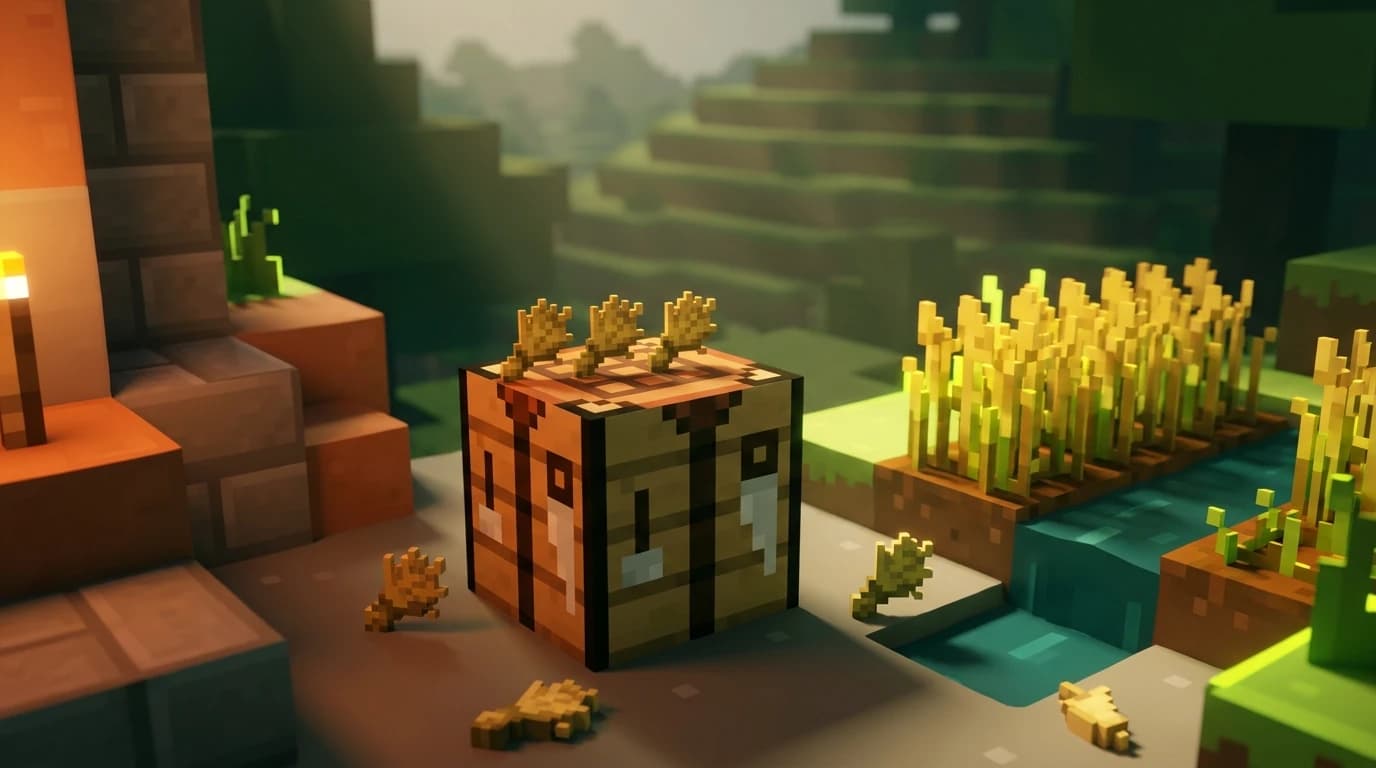
Look for planted fields near village houses. Mature wheat has a golden-brown appearance, while young crops are mostly green. Harvest mature plants rather than breaking the entire farmland, then replant the seeds so the farm keeps producing food.
Hay bales
Hay bales commonly appear around villages. Place a hay bale in the crafting grid to turn it into nine wheat. This makes hay bales more useful than they first appear: one bale provides enough wheat for three bread.
Chests and trading
Wheat can also appear in some generated loot and can be obtained through villager-related gameplay. These methods are useful when you are exploring, but a small wheat field is more reliable once you have settled in one location.
Growing wheat for more bread
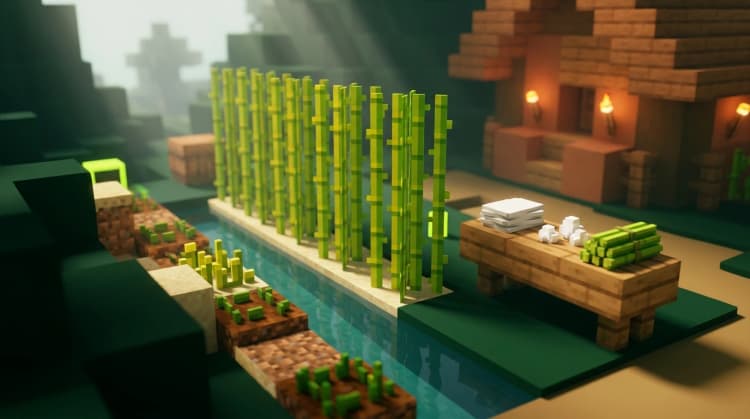
A wheat farm turns bread from a temporary food source into a renewable one. Start by collecting wheat seeds from tall grass or village fields. Prepare dirt near water, plant the seeds, and harvest the wheat when the plants are fully grown.
- Use a hoe on dirt or grass blocks to create farmland.
- Place water close enough to irrigate the farmland. Farmland can be supplied by water within four blocks horizontally.
- Plant wheat seeds on the prepared farmland.
- Keep the area lit if it is underground or enclosed.
- Wait for the wheat to mature.
- Break the mature wheat, collect the wheat and seeds, and replant the seeds.
- Craft the harvested wheat into bread in groups of three.
When you harvest mature wheat, you receive wheat and usually more seeds for replanting. Do not jump repeatedly on farmland because it can turn back into dirt. Fences or walls also help prevent animals from trampling your crops. ([minecraft.net](https://www.minecraft.net/en-us/article/block-week-farmland?utm_source=openai))
Using bone meal
Bone meal can speed up wheat growth. Apply it to a planted wheat crop to advance its growth stages, then harvest it when it is mature. This is useful when you need bread immediately, although a normal farm is more efficient for long-term food production.
Expanding the field
Keep some of your harvest as seeds and use the rest for bread. A compact field near your base is usually enough at first. Later, expand the rows around the same water source or build several small fields instead of one oversized plot.
Once you have wheat stored, three pieces always craft into one bread, so you can plan your food supply easily. One stack of 64 wheat makes 21 bread with one wheat left over.
How to use bread as food
Hold bread in your hand and use the eat button while your hunger bar is not full. Each loaf restores 5 hunger points, shown as 2.5 drumsticks, and provides 6 saturation. Bread is effective for early exploration, mining, farming, and routine travel, although cooked meats generally provide more nourishment per item.
You cannot eat ordinary bread while your hunger bar is completely full. If you are preparing for a long trip, carry several loaves rather than waiting until your hunger is almost empty. Eating earlier helps you keep sprinting and avoids stopping in a dangerous area to search for food.
- Use bread for early-game exploration and regular travel.
- Carry extra loaves before entering caves or traveling far from home.
- Keep wheat seeds separate from wheat so you do not accidentally use all your planting stock.
- Use bread as a backup food while saving higher-value foods for difficult fights.
Bread also stacks up to 64, making it convenient for storage and transportation. It is not the strongest food in the game, but it is simple to produce and does not require cooking or animal farming. ([minecraft.fandom.com](https://minecraft.fandom.com/wiki/Bread?utm_source=openai))
Java Edition and Bedrock Edition differences
The bread recipe is the same in Java Edition and Bedrock Edition: three wheat placed horizontally in a crafting grid produce one bread. The farming process and basic food value are also effectively the same for normal survival play, so these instructions work on PC, console, mobile, and other current vanilla versions.
The main difference you may notice is the user interface. The exact button for opening a crafting table, picking up the result, and eating bread depends on your platform and control settings. The recipe itself does not change.
Common bread-crafting mistakes
If the recipe does not work, check the layout before gathering more materials. Most problems come from using seeds instead of wheat, placing the wheat in the wrong direction, or trying to use the inventory crafting grid.
- Seeds are not wheat: seeds grow crops but cannot replace wheat in the bread recipe.
- Three wheat must be horizontal: a vertical line does not match the shaped recipe.
- Use a crafting table: the 2×2 inventory grid is too small for the recipe.
- Harvest mature crops: breaking young wheat gives seeds but may not give wheat.
- Do not consume every seed: save enough seeds to replant your field.
If you need food immediately, search a village for wheat or hay bales instead of waiting for a new crop to grow. If you are establishing a permanent base, plant the seeds you collect and keep replanting after every harvest. That gives you a dependable supply of bread without relying on exploration.